Search Shepherd wealth Partners

Blog

A “Christian” response to ChatGPT

As technology continues to advance, the latest addition to the field is ChatGPT, an AI language model developed by OpenAI. While this innovation has the potential to bring about significant benefits to various industries, it is important to consider the impact it may have on the economy from a Christian perspective.

From a positive standpoint, ChatGPT has the potential to increase efficiency and productivity. This technology can automate tasks that are time-consuming or repetitive, freeing up human workers to focus on more complex or creative projects. By doing so, it can lead to increased innovation and growth in the economy, leading to increased prosperity and job opportunities.

However, it is also important to consider the potential downsides of this technology. Automation has a tendency to lead to job loss, especially for lower-skilled workers who are at risk of being replaced by AI-powered machines. This can lead to increased poverty and inequality, which goes against the teachings of Christianity to care for the poor and vulnerable.

Additionally, the rise of AI technology like ChatGPT raises ethical concerns about the future of work and the role of humans in society. Christians believe in the value of human life and the importance of work as a means of serving God and contributing to the common good. AI-powered machines may be able to perform certain tasks more efficiently, but they lack the creativity, compassion, and empathy that make human work unique and valuable.

In conclusion, the impact of ChatGPT on the economy must be considered from a holistic perspective that takes into account both the benefits and the potential downsides. Christians must strive to ensure that the benefits of this technology are distributed fairly, and that its implementation does not lead to increased poverty and inequality. They must also work to preserve the value and dignity of human work in the face of technological advancements.

You may have noticed that I put “Christian” in quotes in the title of this post.  That’s because I didn’t actually write it, I had ChatGPT write a post from a Christian perspective on ChatGPT’s effect on the economy.  It took it all of about 10 seconds to do so, and was pretty well written I must say.  No, I won’t be farming out my blog writing to AI anytime soon, but be sure that this new computer thinking is going to have huge effects on our futures, and I do want us thinking about what are the moral implications and how we can use it for the greatest good while striving to love people (who may have thier jobs replaced by a computer at some point soon!).

Bad Assumptions

Have you ever noticed how small mistakes tend to get worse over time?  Cracks tend to spread, gaps often widen.  I recently built a brick paver pathway around the side of my house.  It was an extension of a pathway the previous homeowners installed, and it’s lined by wood beams on either side.  I measured the pavers in the pathway which were 8″ x 4″, making for some decently easy math.  I excavated, laid down a base of gravel, compacted the base, and installed my wood beams with rebar which would allow for 5 bricks laid length-wise (40″ pathway).

I then ordered some brick pavers from the nice folks at Carolina Brick & Materials so I could install the pathway. I was so excited to lay the pathway after spending so much time working on the foundation.  Sadly, the “modern” 8×4 pavers that manufacturers produce are in reality 7.75″ x 3.88″ (unlike the originals), so when I laid out my first row it meant that I needed an extra sliver of a brick on each and every row in order to fill in the gap.  This not only meant several hours of cutting on the wet saw, but now I didn’t have enough pavers and had to order more!

Obviously in hindsight, I had just totally assumed that the new pavers would be the same size as the old.  I wasn’t off by much (0.25″), but that little bit on each paver compounded and caused a lot of headache, time, and extra money.

Assumptions and Financial Planning

Financial planning is a lot of the same.  The output is only as good as the variables we enter.  If our assumptions are wrong, then it makes the entire financial plan not worth the paper it gets printed on!

This is quite a challenge, because you can’t just measure all of your financial inputs like a simple rectangular brick.  For starters, we don’t know what will happen tomorrow let alone 20 years down the road.  The stock market is semi-knowable the further down the road we get, but our lives are just the opposite.  We don’t know what will happen to our income streams, expenses, inflation, taxes, homes, healthcare, children, parents, country, etc.  We make assumptions and best guesses, knowing that our best laid plans are written in pencil with God holding the eraser and permanent marker.

Not only that, but being just slightly off has huge effects over a long period of time.  If we assume that stocks earn 8% annually, $100,000 will grow to $1,006,266 over 30 years.  However just 0.5% more annual growth will grow to $1,155,825 over that same time period.  Even little differences have a compounding effect!

The Illusion of Control

The real kicker of it all is that there are very few parts of our lives and finances that we can actually control.  Most of the things in the list above that we can’t know are also things that are completely out of our control.  That fact alone can have the power to either completely wreck us or increase our faith in a Sovereign God.  If you tend to be a control freak like me, it can be a battle not to let it be the former.  I like to plan things out on spreadsheets; I like right answers.

Unfortunately, right answers can be pretty hard to come by much of the time.  Life can’t be lived on a spreadsheet.  When I try to, others around me suffer and so do I.  The tighter I try to hold on to things, the more frustrated I get when I find things slipping through my grasp.

Good News

There’s a couple of pieces of good news I have for us today.  One is that not everything is beyond our control.  We can control whether we buy the fancy coffee or the new power tool or how much we tip the waiter.  Sometimes the pipes in our old home burst and we have to spend way more than we want on something we can’t even see!  But a lot of our expenses are choices, and as Ron Blue used to say, “every spending decision is a spiritual decision” because it all belongs to God.

We can also control how we handle this uncertain world.  We can decide our attitudes, reactions and outlooks, our work ethic and when we choose to retire.  As out of control as this world seems, we are totally in control of our inner worlds.  And the choices we’re making today will bear fruit later in life.

“Old age is the harvest of all the years that have gone before…We are each, in our earlier years, building the house in which we shall have to live when we grow old.  And we may make it a prison or a palace.”1  To me, how we react to the uncertainties that surround us is much more important than the uncertainties themselves.

Faithful Stewardship

So what do we do with this dichotomy?  What does faithful stewardship and well thought out financial planning look like?

To me, the best course of action is to 1) not focus too much on the wrong things (the uncontrollable), and 2) to not make assumptions that are presuming upon the future.  Will everything need to work out just right for your nest egg to last beyond your life expectancy?  Are we counting on bonus income in order to pay for our expenses?  Will we need multiple incomes to afford the mortgage payment?

Focus on the controllables (you!), and leave yourself margin.  That doesn’t mean that you tear down your barns to build bigger ones, planning God out of the picture.  But it does mean that you leave room for God to change your best laid plans.

1 from Living Life Backward, David Gibson, 2017
Hidden in Plain Sight

It’s not unusual for me to misplace things, which is why God gave me Amy as my wife.  She always seems to have a sixth sense of where my car keys are and she’s got a great memory for the little things.  Which is why it was so odd yesterday when she was panicked over not being able to find a certain credit card that she had laid out on the counter earlier.

Work and school both got interrupted so the two of us could scour the house for the card.  We checked the normal obvious places like the “mail/to do” basket, counters and dressers; then we went for my office, under furniture, in our cars, etc.  Finally we went out and were opening and sorting through bags of garbage!

After an hour or so, Amy had the bright idea of bribing our children with five dollars to whomever could find the missing card, at which point our 14-year-old looked in that same “mail/to do” basket and found it literally within 10 seconds!  We were in a bit of disbelief as the two of us had checked that basket no less than five times.  It felt like some sort of sorcery or cruel joke; like it appeared out of thin air. I still have no idea how we didn’t see it, it’s almost hard to believe.

The Benefit of Hindsight

It’s tempting to feel that way about the markets in 2022.  Hindsight is always 20/20.  The truth is obvious when you can look back at it.  It’s also tempting to wonder why you didn’t make certain decisions, financial or otherwise, in preparation or response.

Similarly, there’s going to be a point we look back on that was the beginning of the true rebound (which may or may not have already come!).  We’ll look back at hindsight on that and know that we should have seen the signs and made some different decisions.  Of course it’s almost always obvious looking back as we have the benefit of additional information.  We also have had all of the other potential outcomes eliminated at that point and we forget that there are numerous ways that situations could have played themselves out.

Stewardship, not prophecy

My hope for us all is that we can take that pressure of reading the tea leaves off of ourselves.  That’s not what God has in mind when it comes to faithful stewardship.  A steward isn’t responsible for having a crystal ball or divine inspiration.  Nor is a steward supposed to be able to control global events or never make a mistake.

Rather, a steward is called to be faithful – full of faith.  Faith that the One who provided the resources in the beginning is good, and has limitless resources at His disposal.  Faith that our actual worth isn’t defined by a net worth statement.  And faith that one day God is going to redeem everything that is broken and that we were made for an eternal home in heaven.

The spirit of the pilgrim greatly facilitates praying.  An earth-bound, earth-satisfied spirit cannot pray.  In such a heart, the flame of spiritual desire is either gone out or smouldering in faintest glow.  The wings of its faith are clipped, its eyes are filmed, its tongue silenced.  – E.M. Bounds The Necessity of Prayer

It feels to me like when I keep my mind and heart on the things of earth, it’s a lot like rummaging through garbage in the hopes of finding what’s missing.  The reality is that 1) that’s not where I’ll find it and 2) it’s a miserable experience in general.

So, fellow steward, let’s keep our focus on what we can control, namely where our ultimate hope is and how we will respond to those situations in life that go awry.  When we focus on those, we’ll be a people more filled with joy, less bothered by a crumbling culture, and able to offer hope to those around us.

Anything But Certain

I haven’t watched a ton of football games this year, but I did manage to catch the instant classic between the Buffalo Bills and Kansas City Chiefs last night.  It was a great back-and-forth game throughout, but really turned up the heat in the 4th quarter.  If you can believe it, both teams managed to score twice within the last two minutes of the game, and the Bills seemed to have struck a fatal blow to the reigning AFC champions, scoring a touchdown on 4th and 13 to put themselves up by 3 with only 13 seconds left on the clock.  Their players and fans were going bananas, knowing that they had certainly just punched their ticket to the AFC title game.

Or so they thought…

The Chiefs had zero margin for error.  After getting the ball back, their first play was a 19 yard pass that took all of 5 seconds off the clock.  Their second play was a 23 yard bullet that took another 5 seconds of game clock.  They found themselves at the Bills 31-yard line, in position to hit a game-tying field goal as time expired, sending it to overtime.  As fate seemed to have it, they won the coin toss, drove the ball right down the field, and sent the Bills home in stunned fashion.

If you’re any sort of sports fan (other than a Bills fan), I hope you got to witness it.  It was truly a fantastic game with an unreal ending.  And as I woke up this morning and watched the stock market begin to get trounced again, I was reminded of the uncertainty of the things that seem so certain sometimes.

The markets seem like they’re starting to spiral out of control a bit, much as they did in March of 2020 or in late 2008.   There isn’t a lot of optimism out there for things to just turn back around.  Inflation is soaring, rates are rising, and there’s a potential international war at hand.  It doesn’t look particularly great out there, which is understandably concerning for investors.

But if you’ve been around a while, you also know 1) that absolutely no one knows when things will quickly turn around, and 2) how the story ultimately ends.  That may not be a ton of comfort when stocks continue a slide.  That doesn’t make you not want to second-guess yourself.  It seems easy to call the market peak in hind-sight, but near impossible when we’re actually there.  Instead, there are a few things to remind ourselves of when in the midst of these uncertain times.

You should be fine without needing to time the market

While staying the course seems tough, and potentially harmful on days like today, it’s far less harmful than making the wrong move at the wrong time.  The only folks that really end up with regrets are the ones that sell at the bottom and then wonder when to get back into the market, or look at all of the potential gains that they forfeited.

When you try to time the market, you have to be “right” both when you get out, but also when to get back in.  As if timing the market once weren’t hard enough, doing it twice takes lottery kind of luck.

Now is the time to consider deploying cash

If you’ve been keeping your war chest stocked, now is looking more and more like a great buying opportunity.  Cash that has been sitting on the sidelines now has a somewhat compelling place to go, with prices on stocks coming more into reasonable territory.

There’s still a lot of risk in stocks (as there always will be), but funds that you don’t need for at least 5-7 years can start to be considered for investments that may have previously been sitting in a money market account earning .00000001%.  Of course, please don’t take any cash that you may be counting on in the next year or two and put it in the stock market, as we have no idea where the real bottom is.

Know  your enemy

Last night, the Bills had to pack their things and head home, with their season ending instantly.  And it came at the expense of their budding rival.  Remember that while there are headwinds to growth, and political and economic policies that sometimes feel damaging or destructive, this isn’t a game and there are no enemies.  Our only real enemies are the devil who wants us to keep our eyes on our wealth instead of on God, and ourselves.  We can lie to ourselves better than anyone else, and send ourselves into emotional frenzies at times.

Fortunately, our ally and teammate is the One who created it all, who knows us fully and considers us precious and honored in his sight (Isa 43:4).  He also richly provides us with everything (I Tim 6:17), has already defeated the enemy, and is unchanging forever.  I can’t think of anything more certain than that!

Deciding Never To Punt

Kevin Kelley, who was recently hired by Presbyterian College, has been known as the high school football coach who never punts.  Literally.  His teams never punt the ball, almost always attempt onside kicks and two-point conversions, frequently run laterals and trick plays, and basically do all the things that conventional wisdom would say not to do.  When asked about his extremely unconventional approach, he goes back to one simple axiom – The Numbers Don’t Lie.

Most folks see Kelley’s approach as extremely risky.  How could going for it on 4th and 16 from your own 5 yard line be a statistically good move?  If the other team takes over at your 5-yard line, they have a 92% chance of scoring a touchdown.  But a punt from the 5-yard line will give them the ball on average at your 40-yard line, where they still have a 77% chance of scoring a touchdown.  So while there’s a good chance that you’ve upped their odds from 77% to 92%, if you can complete the play you give your own team a chance at scoring or at the least you would drastically reduce your opponent’s chances whenever they get the ball back.

What does all of that mean?  While counterintuitive, it’s actually statistically riskier to punt the ball than to go for it.  Punting feels safer, as does kicking the ball deep on kickoffs and much of the other conventional wisdom.  But how many times have you watched a team “play it safe” only to squander a lead or give an opponent a chance to come back and steal a win?

The same is true with our money decisions, particularly when it comes to investments.  Conventional wisdom would say if you’re “X” age then you should have “Y” amounts in stocks and “Z” amount in bonds.  Most of the thinking has to do with volatility, and how much your investments could go up or down.  And that should certainly be a factor when it comes to investment decisions.  But it never should be the only one.  Investing overly-aggressive increases the odds of a large drop over a short period of time.  On the other hand, investing overly-conservative almost guarantees a smaller gain over a longer period of time.   The numbers don’t lie.

According to Vanguard, from 1926-2020, a portfolio that is 60% stocks/40% bonds has had an average annual return of 9.1%, and during the worst year (1931) the portfolio would have lost -26.6%.  On the other hand, a portfolio that is 100% stocks would have averaged 10.3% and had a worst 1-year return of -43.1%.  If you’re investing $500,000, the increased drop (additional 16.5%) would mean losing another $82,000 (assuming it happened in year one).  However, if you’re investing over 30 years, then the additional long term average translates to a net additional increase of $2,648,630 from using the more aggressive allocation!

We can use the same principal when it comes to how much to pay for college, insurance coverages, loans, Social Security, and many other money decisions.  Too often we find ourselves being overly swayed by emotions or conventional wisdom when the numbers might tell a different story.

Where does the analogy break down?  For starters, I’d argue that while the numbers don’t lie, stewardship isn’t all about the numbers.  There are other factors involved such as emotions, relationships, and spiritual convictions.  Leveraging debt might make the most sense from a numerical standpoint, but still might not be the best move.  Running up the score might seem like the best financial strategy when God might call you to do just the opposite.

I think what we should all do, however, is to evaluate all of the risks in different money situations.  Are we being blinded by conventional wisdom?  Are we acting out of either fear or greed?  What I applaud Kevin Kelley for doing is trying to take the emotions out of emotional situations, and not being afraid to go against the grain.  The results?  His teams have won 9 state titles, including a 13-0 finish by his team last year!

Where have you decided to punt that might need some reconsidering?  Is it time to consider an onside kick somewhere?

Where Should I Give?

Hopefully you’ve been reading enough from Shepherd to know that we’re big fans of charitable giving.  We want to be your cheerleaders in this, encouraging and inspiring you to want to increase your giving beyond your current levels.  I’ve written about why to give and how to give, but from time to time I get asked exactly where are good or right places to give.  How much should go to church vs other charities and which charities are worth supporting?

Church vs Charities

In some ways this answer depends on who you ask.  A pastor might quote Malachi 3:10, “Bring the whole tithe into the storehouse (likely insisting this is the local church) that there would be food in my house.”  Your missionary friend, on the other hand, might point out that most of the New Testament giving was done to either provide for the poor or to fund missionary journeys.

The best route here is to avoid legalism and the temptation to be right.  If you’re a Christian, then yes you should give to your church.  If you don’t think it’s worth supporting or are concerned that they won’t steward your funds well, then maybe it’s time to find another church to join.  Prayerfully consider how much of your giving dollars should go to the church, but I think Scripture is pretty clear either way that it should not be an insignificant amount.  If you’re able, go ahead and give 10% or more of your income to your church.

Which charities are worth supporting?

There are over 1.8 million charitable organizations in the US alone, according to GuideStar.  How are we possibly to decide which ones to support?  As a general principle, I think its best to focus our giving on the causes and people we are instructed in the Bible to support.  Kingdom Advisors has a great summary resource of many of these verses to help give us a framework for the various areas worthy of our giving.  They’ve identified 11 specific causes and people groups, and then categorized those into three broad areas of ministry of the Word, ministry of mercy, and ministry of justice.  I highly recommend reading through these verses, praying through the various areas and identifying any that perhaps you feel called to increase your giving to.

If you know there’s a cause you want to support but aren’t sure where to start, GuideStar, Charity Watch and Charity Navigator all have tools to help you search for charities that meet certain criteria.  They can also help you look up the charities you currently support to see how the rank from a stewardship perspective.

What about non-religious organizations?

This is another one of those personal opinion areas.  Of course there’s nothing wrong with being generous to non-religious organizations such as the pet shelter or your alma mater.  We all have groups that mean a lot to us for various reasons and it feels good to help them out as they have helped us.

I think it’s worth remembering that there are plenty of others that will support these secular causes while there are very few non-Christians who would be interested in supporting kingdom-oriented work.  So my personal conviction is that the bulk of our giving should go to those things mentioned above that are outlined in Scripture.  There are also those secular organizations that do the work we are instructed to carry out in scripture – caring for the poor and the oppressed, taking care of orphans, etc.  If possible, try to align the groups you support with those who want to meet spiritual needs in addition to physical needs.

Above all, I want to reiterate that it’s important to refrain from legalism in all of this, both in the organizations we choose to support as well as those of our neighbors.  We won’t earn God’s favor by giving the right amounts or to the right charities.  Putting that pressure on ourselves is dangerous and robs all of the joy from the giving.

The point in all of this is to give from a loving and generous heart.  Recognize how much you’ve been given, be intentional in where your dollars are going, and strive to give as well as you can!

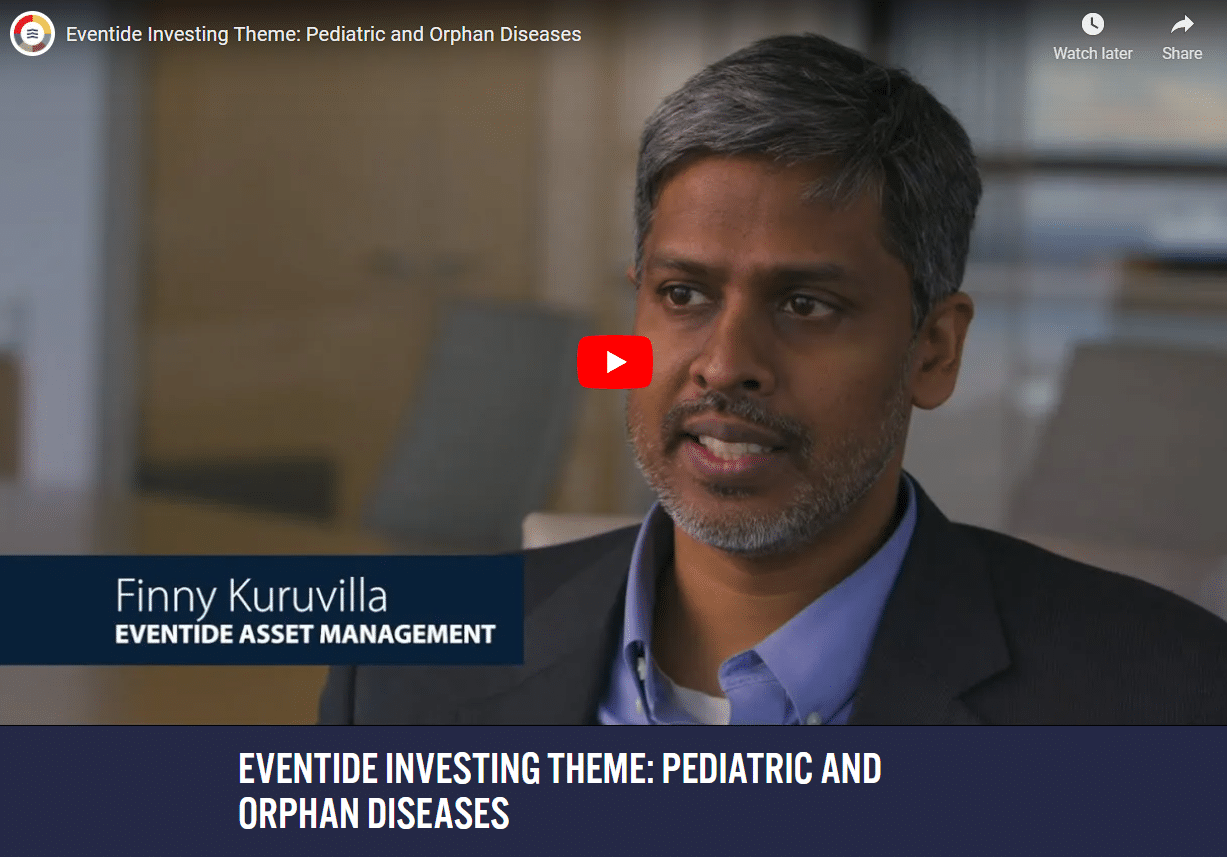
Eventide Investing Theme: Pediatric and Orphan Diseases

https://insights.eventideinvestments.com/eventide-investing-theme-pediatric-and-orphan-diseases

Muscular Dystrophy is a terrible pediatric condition that has remained largely untreatable until recent medical developments.  Listen to Finny Kuruvilla, CIO of Eventide Investments as he details some of the causes of the disorder as well as what one company is doing to attempt to not only slow down, but possibly cure, muscular dystrophy.

We partner with Eventide in the creation of our Biblically Responsible Investing portfolios, one of several options available to our clients.  You can find this original video with some commentary (as well as other investing insights) at https://insights.eventideinvestments.com.

This communication is provided for informational purposes only and expresses views of Eventide Asset Management, LLC (“Eventide”), an investment adviser, and not necessarily those of Shepherd Wealth Partners, LLC.  There is no guarantee that any investment strategy will achieve its objectives, generate profits, or avoid losses. Eventide’s values-based approach to investing may not produce desired results and could result in underperformance compared with other investments.

Greater Worth Than Gold

Praise be to the God and Father of our Lord Jesus Christ! In his great mercy he has given us new birth into a living hope through the resurrection of Jesus Christ from the dead, and into an inheritance that can never perish, spoil or fade. This inheritance is kept in heaven for you, who through faith are shielded by God’s power until the coming of the salvation that is ready to be revealed in the last time. In all this you greatly rejoice, though now for a little while you may have had to suffer grief in all kinds of trials. These have come so that the proven genuineness of your faith–of greater worth than gold, which perishes even though refined by fire–may result in praise, glory and honor when Jesus Christ is revealed. – 1 Peter 1:4-7

Peter’s praise of God seems pretty spot-on.  That is an overwhelming list of all that we’ve been given by God:

  • New birth
  • A living hope
  • An imperishable inheritance
  • Shielding by God’s power

So because of all of this, we can greatly rejoice.  That part makes sense, at least in my head.  Because if I’m honest there are a lot of days that I don’t really feel like rejoicing.  There’s a lot of chaos in the world, our country, and my own life.  I suppose this is why Peter feels the need to write this letter.  His readers were Christians being persecuted by the government, in danger of losing possessions, homes, and their very lives.  They were indeed “suffering grief” by their “various trials”.

Our trials certainly are various right now!  They might include the sudden impacts of COVID and its various tentacles.  They might be the craziness of our country with the political drama, social media insanities, or feeling that the moral fabric is being ripped to shreds.  And sometimes they’re even more insidious.  Sometimes our biggest trials come through a lack of suffering.  Before you write me off, hear me out.  I’m convinced that the more deadly of trials to us is actually in the ease of life, when things are going our way.

Wealth as a test

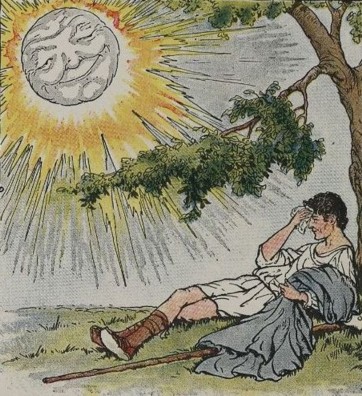
Aesop tells the fable of the North Wind and the Sun.  They had a competition to try to decide who was the mightier of the two.  They decided to try to make a traveler take off his coat.  No matter how hard the wind blew, the traveler just wrapped it around him more tightly.  When the sun shone brightly, however, the traveler was overcome with heat and took off his coat rather quickly.  We often fear the stormy gale, not realizing that the blaze of the sun can affect us just as much if not more.

It’s often said that it’s easy to trust God when things are going well with us.  But I think it’s more appropriate to say that it doesn’t require any faith in God when things are going well with us.

This can be a continual test for the wealthy.  The more we have, the harder it is to feel in need of a Provider and Protector.  Prosperity, rather than a blessing, can actually be one of the toughest challenges we face.  Will our faith stand up in the face of prosperity?  Or will it burn up like the gold in our purses?

Wealth as a comparison

Peter tells us that our faith is of greater worth than gold.  Here’s another challenge of faith – do we truly believe this is true?  Do we spend as much time worrying about the quality of our faith as we do the quality of the economy or our investments?  The truth is obvious here – our gold will perish but our inheritance in heaven will not.  Yet it’s easy to spend much more time and energy fretting about current events than eternal events.

It’s been said that as stewards we possess much but own nothing.  And while that’s true, if we begin to put our hearts on the things we possess then we can easily get owned by the things themselves.

“[A thing] possesses us, if we are devoted to it as our best good, and fighting and toiling, and sometimes lying and cheating, and flinging the whole fierce energy of our nature into first gripping and then holding it; it possesses us; we do not possess it.” <https://biblehub.com/commentaries/maclaren/1_peter/1.htm>

On the contrary, when we grow in our faith, we actually possess and own something of eternal value.  It is the “tap root” of all other positive character traits, the headwater for the streams of life.  And when we grow that root, it is established not just for the rest of our life, but for the life to come.

The ultimate reward

So why do we chase after gold on earth?  For some it is security; others pursue it for pleasures of things or experiences; for you it might be something different altogether.  Notice the payoff that Peter refers to of our faith – that they may result in praise, glory and honor when Jesus Christ is revealed.  Peter’s not talking about God’s praise from us, but rather his praise for us for living a life well spent, for not getting distracted by the trappings of this world, for keeping our eyes on the prize.

The rewards on earth are temporary at best.  They seem cheap in comparison.  If we strive after gold, then we can never have enough of it.  But if we can shift our mindset and strive after the things that will last, then we can have “enough” no matter how much we have.  And this takes the worry off of what will happen to the markets, tax laws, governmental mandates or any freedoms or rights you feel might be at risk.

If anything, I want to encourage you to watch out for the days that are too sunny, lest we get too comfortable and put our trust in ourselves and our things.  While the gusty winds aren’t pleasant, they’re achieving something great in us and for us, and for that we can thank the Maker of the winds!

Are You Ready For a Sucker Punch?

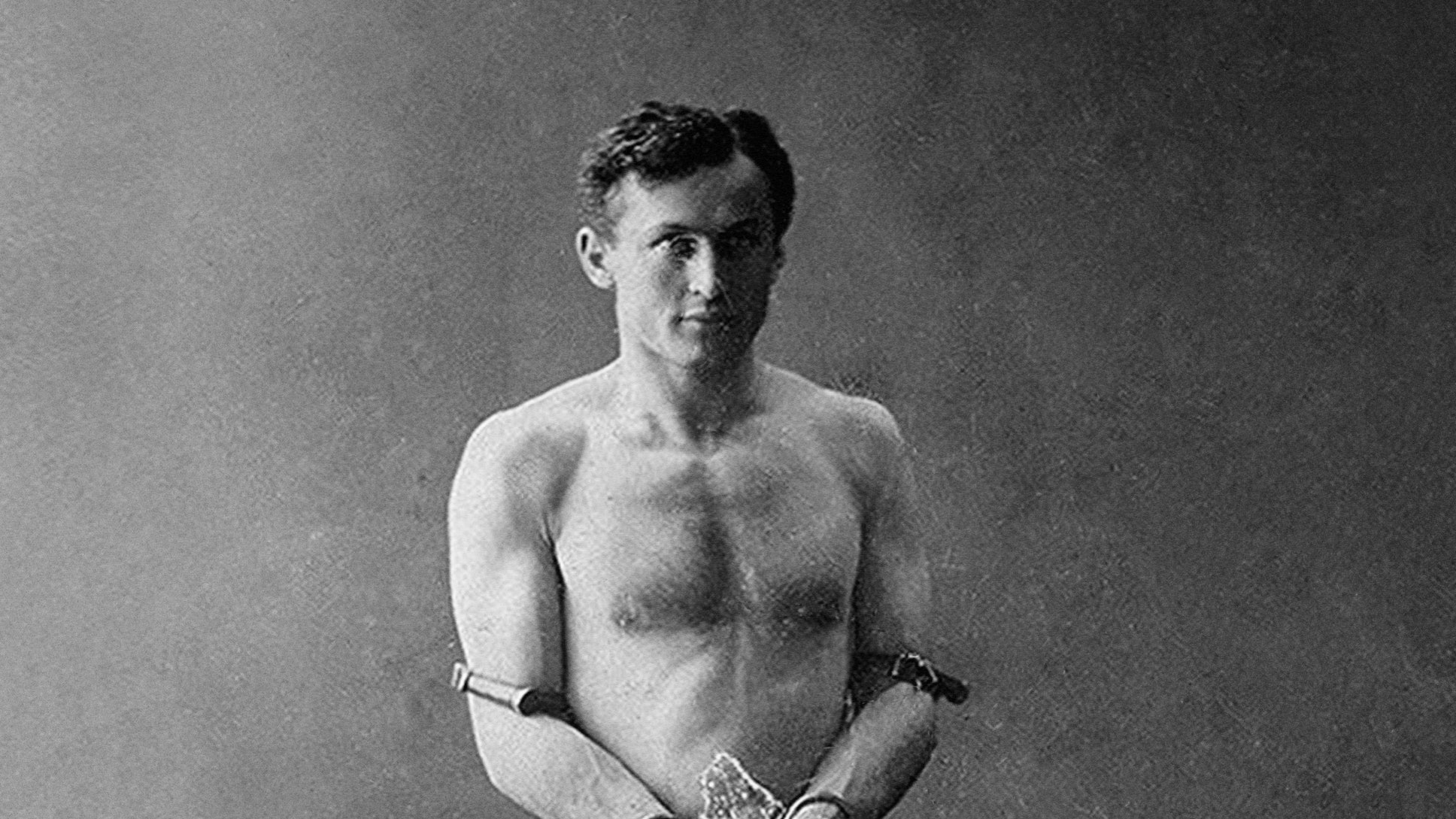
Harry Houdini was one of the greatest illusionists and escape artists we have ever known.  While most know him for escaping perilous entrapments involving strait jackets, handcuffs and being submerged underwater, it was another act that led to his ultimate death.

Houdini claimed he could take a punch in the stomach from anyone.  Accordingly, at the end of his shows he would routinely call up the biggest, strongest man from the audience and instruct him to hit him as hard as possible in the stomach.  After one such show at McGill University, Houdini invited a few college students backstage to his dressing room.  One of the young men asked Houdini if it was true that he could take a punch from anyone in stomach.  Houdini, relaxing on a couch, acknowledged that it was true.  The man then suddenly hit him in the stomach several times with forceful blows.  Because Houdini had no time to prepare for the punches, the man inadvertently ruptured his appendix, which caused Houdini’s death a week later.

Last year was a hard, stressful one for the world that saw a 35% drop in the markets.  It was a sucker-punch to the gut, a crisis not caused by systemic weaknesses or an eroding economy, but by a blow that no one saw coming.  When we look at the history of the markets, it’s often the unexpected events like these that rattle markets the most.  In 2020 it was COVID, and before that there were events like Lehman brothers not finding any buyers, the Flash Crash, Black Monday, etc. These events often leave the markets reeling much more so than the ones we see coming.  The markets have gone through the past two elections without much of a hiccup, and they endured the terrible unemployment and earnings data from COVID rather well because we pretty much knew they were coming at that point.

Much like Houdini, the markets can take a very strong punch to the gut, but only if they see it coming.  That should be encouraging as we think through the uncertainty of when vaccines will offer some sort of herd immunity, how a Democrat-controlled government will affect the economy and taxes, or a myriad of other concerns that you might be thinking through.  These are issues that the markets and investors know about and are mostly factored in already to the current prices of stocks.  When we look back, it will likely not be these issues that cause a huge disruption to the stock market.  Instead it’s likely going to be something that literally no one is talking about right now that has the biggest effect on the stock market in 2021.

Of course, that can be pretty discouraging because it means that we’re able to get the wind knocked out of us at any moment by something we can’t predict nor do anything about!  Will it be pandemic-related, political, economic, or something totally out of left field?  No one knows.  Remember that!  No one, not even the smartest prognosticators, know the forces that will truly control the markets in 2021.  That means that you certainly don’t have to have it all figured out either.  It reminds me of James 4:13-15:

Now listen, you who say, “Today or tomorrow we will go to this or that city, spend a year there, carry on business and make money.” Why, you do not even know what will happen tomorrow. What is your life? You are a mist that appears for a little while and then vanishes. Instead, you ought to say, “If it is the Lord’s will, we will live and do this or that.”

You probably felt like you took some big punches to the stomach last year and would care to pass on any more.  And while that may be true in life, most of you did phenomenally well with your investments in 2020.  That’s because while you can’t avoid the punches, you can keep your investments ready for them so you don’t get caught off guard.  This is the main reason why you need to hold adequate amounts of conservative investments.  So that when the next punch comes, you can take it in stride.  Keeping enough in bonds and cash might feel unproductive at times, but it allows you to weather the toughest of storms.  So long as you don’t sell your stocks in the middle of the drop, you can walk away mostly unscathed.  That’s how you can end up with a positive 18.4% return on the S&P 500 Index despite a 35% drop!

The other main way to prepare for the punch is to get your mind right.  The fact is that our main enemy in investing is not volatility, but our own emotions!  Keep a long-term perspective on things.  Remember that the future has always been uncertain, there have always been economic and political concerns, and there is a God who is good and in control of it all.  Remind yourself that if the Lord wills, we will live and do this or that.

Do I Need a Revocable Trust?

I’m going to start this by assuming that you have a valid will in place.  If not, close your browser and go make that happen!  For the rest of you, you may have wondered if your will is sufficient to take care of your estate when you pass away.  Estate law is an ever-changing area, and what might have been a good idea a decade ago might be completely unnecessary or even harmful now.  I’m going to tackle one of those often misunderstood tools, the revocable trust, and shed some light to hopefully give you some peace of mind and a solid game plan.  (Please keep in mind that I’m not an attorney, so you should run any of this by your attorney before making any changes to your estate plan!)

What is a Revocable Trust?

A Revocable Trust (a.k.a Living Trust, Revocable Living Trust) is just that – a trust you create that you can revoke at any time while you’re still alive.  While you’re alive, it’s a pass-through non-taxable entity that is essentially a will-substitute.  By that I mean that assets owned by your revocable trust won’t pass through your will but rather through the instructions of the trust document.  If you have a revocable trust, you will still need a will, and typically wills drafted alongside revocable trusts are referred to as “pour-over wills”, in that they pour over any assets that happen to pass through your will into the trust.

Benefits of a Revocable Trust

The main benefits of the revocable trust are avoiding probate and keeping things private.

Avoiding Probate – Assets that pass through your will are subject to probate (the process of validating a will).  This sometimes lengthy process has fees associated with it (probate fees) and can tie assets up for a time period until the will has been validated by the courts.  Thankfully the probate laws in NC are very friendly towards estates.  If you had a normal will (no rev. trust), your probate assets would typically include your personal property (vehicles, jewelry, cars, etc.) and any financial accounts that do not have a beneficiary designation.  This last part is huge, because it means that retirement accounts and life insurance policies (assuming you named a beneficiary) and any jointly owned property will pass automatically outside of probate.

Avoiding Fees – In NC, probate assets are subject to a fees of $40 plus $4 for every $1,000 of probate assets.  So if your probate assets total $100,000, this would be a fee of $440.

Other states, such as SC, aren’t quite as probate-friendly, so if you don’t live in NC you should check out your state’s particular probate laws and fees.

Keeping things private – After wills are finalized and the estate is settled, wills become part of public record.  So if you don’t want family members or others knowing what your will said or how much personal property you had, you can put these things in trust so that only the pour-over will and any remaining personal property would be subject to public records.

Alternatives to a Revocable Trust

One of the best free estate-planning tools out there are utilizing beneficiary designations.  Bank accounts and non-retirement investment accounts are often owned Joint Tenants with Rights of Survivorship which, as mentioned above, will avoid probate.  But if you are single, divorced, or widowed you can add a Payable on Death (POD) designation on bank accounts or a Transfer on Death (TOD) designation on investment accounts which will act just like a beneficiary designation on a retirement account.  This means that these assets pass directly to your heirs with no need for a trust.

For NC residents, utilizing this strategy will often only leave cars, jewelry, furniture and collectibles in the probate estate and is much quicker and less costly than setting up a revocable trust.

Who might need a Revocable Trust

If you own real estate in several states, a revocable trust might be a good idea.  Real estate is subject to probate based on the state of location, not your state of residency.  You could end up going through probate in several states if you have a lot of real estate investments.  In this case, owning them in a trust would avoid probate and likely be a good idea.

Similarly, if you have a more complicated estate, such as one involving a special needs beneficiary, a blended family situation or other complications, a trust may be a great idea.  It may, in fact, be a different kind of trust, but if you think you have complications that most folks wouldn’t then you should certainly talk to a financial planner or attorney to give you some counsel regarding your situation.

Implementing the Trust

If you do decide to use a revocable trust, then by all means make sure that you use it properly.  I’ve seen on numerous occasions folks have spent the time and money to have a revocable trust written, and then either never execute the document or leave it empty.  Having a trust in place does nothing if it’s not funded.  So if you have assets that you want to pass through the trust and not your will, you have to have them retitled in the name of the trust.

Hopefully that helps steer you in the right direction.  If you have any other questions or need some additional steering, please reach out and let us know.  We’re happy to help you navigate these decisions and are thankful for the trust you place in us!

Is the Coast Clear?

Unless you live in Georgia, we’ve actually made it through the elections!  Most races have been called, some things have been decided, and little is known about what the next four years will actually look like.  So far it would seem that investors aren’t terribly scared of a Biden presidency and are hopeful that a vaccine will somehow restore some normalcy to life and save many others.  But I’m getting lots of questions on what I think the markets will do from here, whether we should get more into the market or pull out of the market, etc.

The bad news is that there is literally no one that knows the answers to these questions.  Predictions are bountiful; wisdom can be much more elusive however.  The good news is that God is not surprised by any of it, and He knows exactly what the future holds and is totally in control.  And while we may (or may not) believe that in our heart of hearts, we still have to make decisions regarding our investments, tax planning and other financial matters.  As I’ve pondered these issues and looked to wise counsel and God’s word, here are some of my own personal convictions:

Stocks seem to be risky, but bonds may be even riskier

We can put relative prices on stocks by various measures, such as the price/earnings ratio, etc.  When we look at many of these gauges, they are almost all pointing to the fact that stocks are a bit pricey right now.  And when stocks are pricey, that can be a big headwind for the following years.  Prices can continue to increase, but there’s just a bit more downside risk than normal.

However, interest rates are so historically low, that the main alternative to stocks, bonds, are even riskier relative to their norm.  Bonds won’t be producing much income over the next few years, and if rates increase from here, your bonds can begin to lose value.  Savings accounts look just as depressing.

The good news for bonds is that the Fed has shown they have every intention of artificially keeping rates low for several years, so the main risk is not necessarily losing a lot of money but more so in just failing to make any income and likely not even keeping up with inflation.  This has a real-life impact of losing money even if your balance sheet doesn’t reflect it.

The good news for stocks is that while they may be overpriced, even a reversion to historical averages still allows them to average a positive return.  It might not be 8-10% a year, but if you have several years before you need the funds, you’re almost certainly to earn more money in stocks than in bonds over the years to come.  So treat stocks like the bull they’re symbolized by: an animal that can be a tremendous worker on your behalf, but also one that can gore you if you’re not careful!

The only thing certain is uncertainty

Speaking of being almost certain of things, I’m more convinced than ever that we can just expect a continued environment of uncertainty and volatility going forward.  No matter what you think of the election results, the world still remains at a heightened sense of overreaction to everything.  It seems that our dials are set at a “7”, so moving up to a “10” on the freak-out scale doesn’t take much effort at all.

The positive news on this conviction is that volatility and freaking-out is what enables stocks to continue to increase in price over time.  Taking appropriate risks is rewarded over a long period of time, so it’s okay to let the world panic and over-react to things if you can keep a level head throughout it all.

The best thing you can do is limit your intake of news feeds, stay away from social media fist fights, and soak yourself  in the Truth so that you are able to spot the lies.

Your job is not to know the future or to get every decision right

So what are we to do with all of this uncertainty?  For me the answer is to stop trying to control things I can’t control.  God uses the uncertainty to force us to lean into Him, as we quickly realize that the number of things we actually can control are surprisingly little.  In fact, just about the only thing I can control is myself.  Knowing that takes a lot of the pressure off.  Pressure from pleasing other people, predicting the stock market, or getting all of the decisions of life right.  Rather, can I flee from anxiety, love people well, and experience more contentment and generosity.  These things are fully in my control and will result in way more peace and joy than an increased IRA account.

As always, we’re here to talk over any of these topics (although who isn’t tired of talking about the election!) or anything else.  Thanks for allowing us to walk with you through the challenges of wealth and be your trusted advisor.  Blessings on the journey!

Battling with Pennies

A penny will hide the biggest star in the universe if you hold it close enough to your eye – Samuel Grafton

It’s so true, isn’t it?  When money becomes too important to us, we begin to lose perspective on the bigger things in life.  That’s why Scripture is chock full of warnings over the dangers of money.  Of course money in itself isn’t bad, but there is nothing else in the world that has the power to corrupt humans like the lure of money.

A Noble Battle

I recently read In Freedom’s Cause, a Story of Wallace and Bruce, which outlined Scotland’s long battle for freedom from the English.  Their main challenge wasn’t the army of England, or the lack of weapons or skill, but rather their own nobles who kept selling out their own country in order to secure their lands and castles for themselves.  They would promise their support in battle and then repeatedly pull out at the last minute, leaving their countrymen hopelessly outnumbered.

It was heartbreaking to read, but sadly this story has repeated itself throughout history.  Countless Biblical stories remind us of people cheating, stealing and swindling others.  Today things seem even worse with companies and governments doing whatever is necessary to get ahead.  We act as if the almighty dollar is just that – all mighty – when we clearly ought to know better.

Our Own Battle

I’m oddly thankful for the large drops in the stock market (okay, I’m only partially thankful!) because they offer us the opportunity to examine where our treasure is.  They are a great barometer of how close we’re holding our pennies up to our eyeballs.  Even if you were one of those highly disciplined individuals who refused to look at your account balance at the worst of it all, you likely refrained because you knew how you’d feel if you looked.  It keeps us from panicking, but has it really done anything to remove the idolatry from our heart?

Please don’t hear any judgment from me in this.  I wrestle with it like everyone else, and this is precisely the reason that there are over 2,000 verses in the Bible dealing with money and possessions.  God knew that this world would try to compete for our heart’s affections.  He knew that so long as we lived on earth that the things of earth would lure us towards them.

I hope you do wrestle with it though.  Because my temptation now that the markets are at all-time highs again is (other than wondering why in the world the markets are at all-time highs!) is to breathe out a bit since my sense of security has been restored.  Not that I want us to live in a place of panic, but is my future really any more secure now than it was in March?  How much of my hope do I put in my net worth statement, versus God’s statements to me of my worth?   These are the true challenges of stewardship in an affluent society such as ours.

Winning the Battle

What’s the antidote to all of this?  I believe it’s by intentionally starting to hold our penny’s a little further away.  That means not trying to control them so tightly (yes, of course you can still use a budget ;)). It means giving more generously, one of the best way to loosen our grip on our money.  And it means praying regularly and asking God to show you any areas where you’re tempted to love money or this world more than Him.  There are great promises for us when we begin to do this.  God offers us freedom (by becoming his bondservants), abundant life (by dying to ourselves), and richer relationships (by loving others more than ourselves).

The Scottish nobles’ problem wasn’t that they were looking for the wrong things.  Their problem was that they were looking for them in the wrong places.  They were looking for things in this world that only God can truly offer us.  In doing so, we can win the battles that ultimately matter, and be assured of obtaining true riches.

GET CONSULTATION